A stable, carbon-rich material applied to soil and pasture.
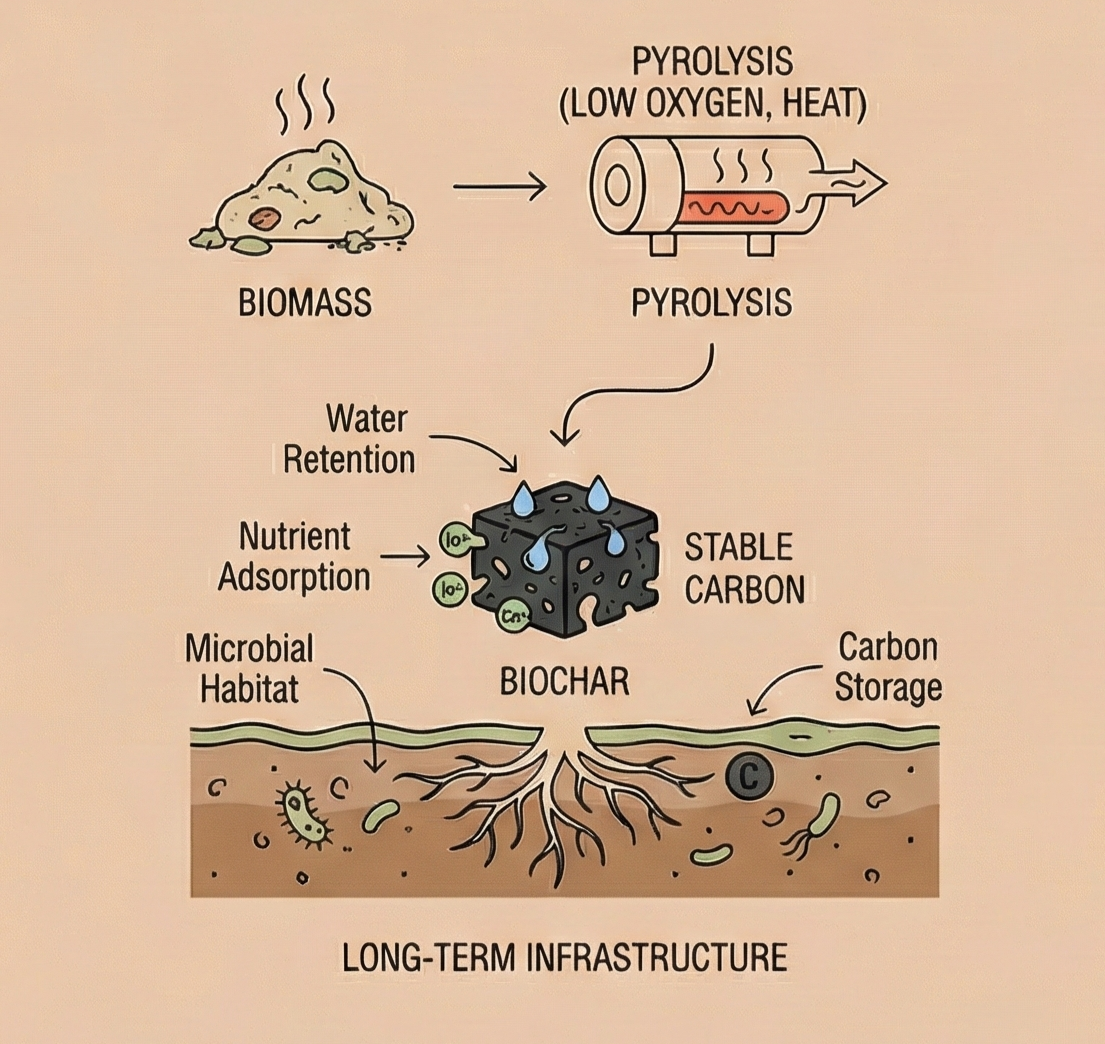
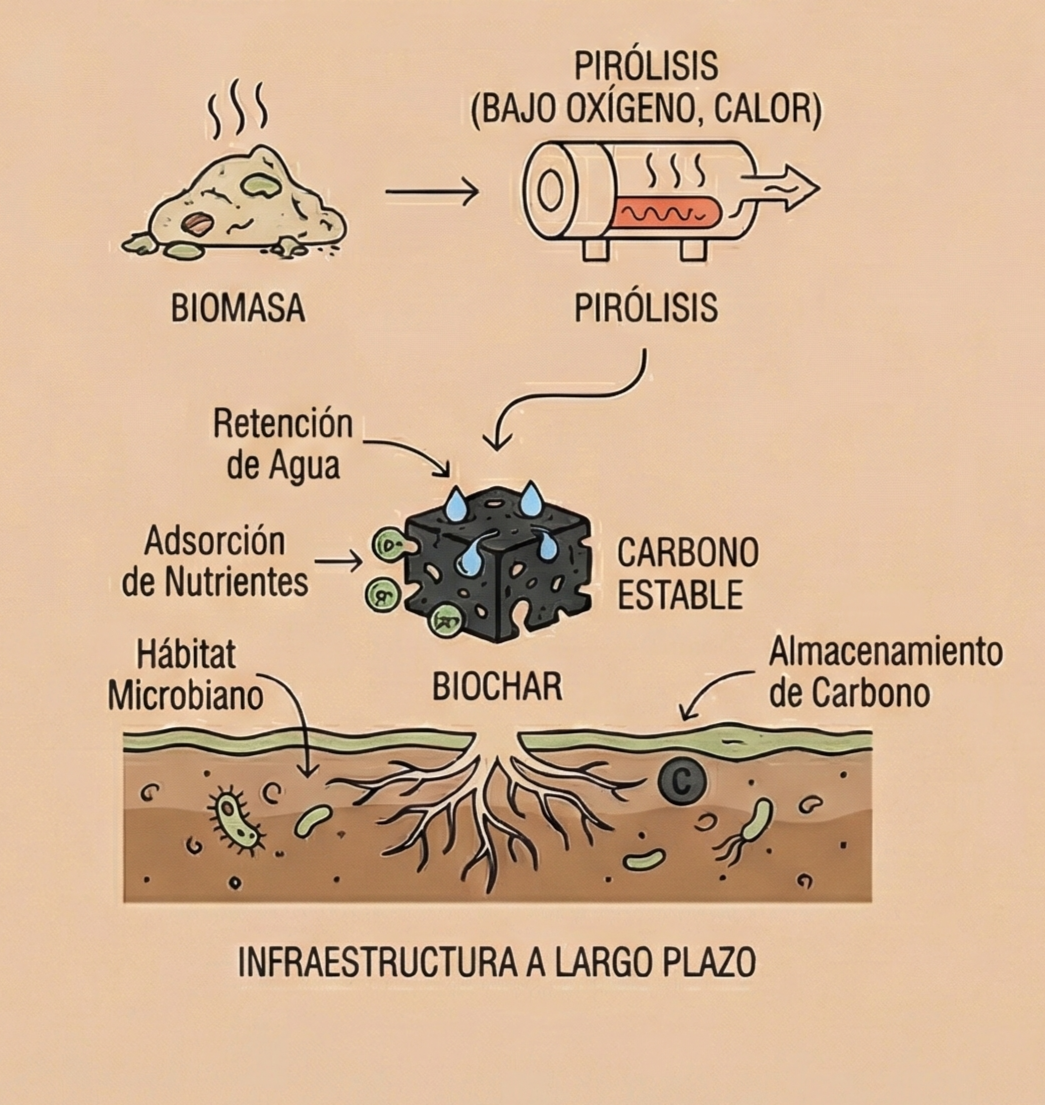
Biochar is a stable, carbon-rich material produced by heating biomass under low-oxygen conditions. It is applied to soil or pasture and remains active for many years.
It does not disappear after one production cycle. Biochar functions as long-term soil and land infrastructure, improving how water, nutrients, and biological activity interact.
What biochar does in your land and pastures
Biochar helps to:
- Retain water during dry periods
- Reduce nutrient losses after heavy rain
- Improve fertilizer efficiency
- Stabilize soil structure and reduce degradation
- Improve root-zone conditions in both cropland and pasture
The result is more stable yields, more resilient pasture productivity, and lower input waste while storing carbon in a durable form.

Agricultural operations are under growing pressure.
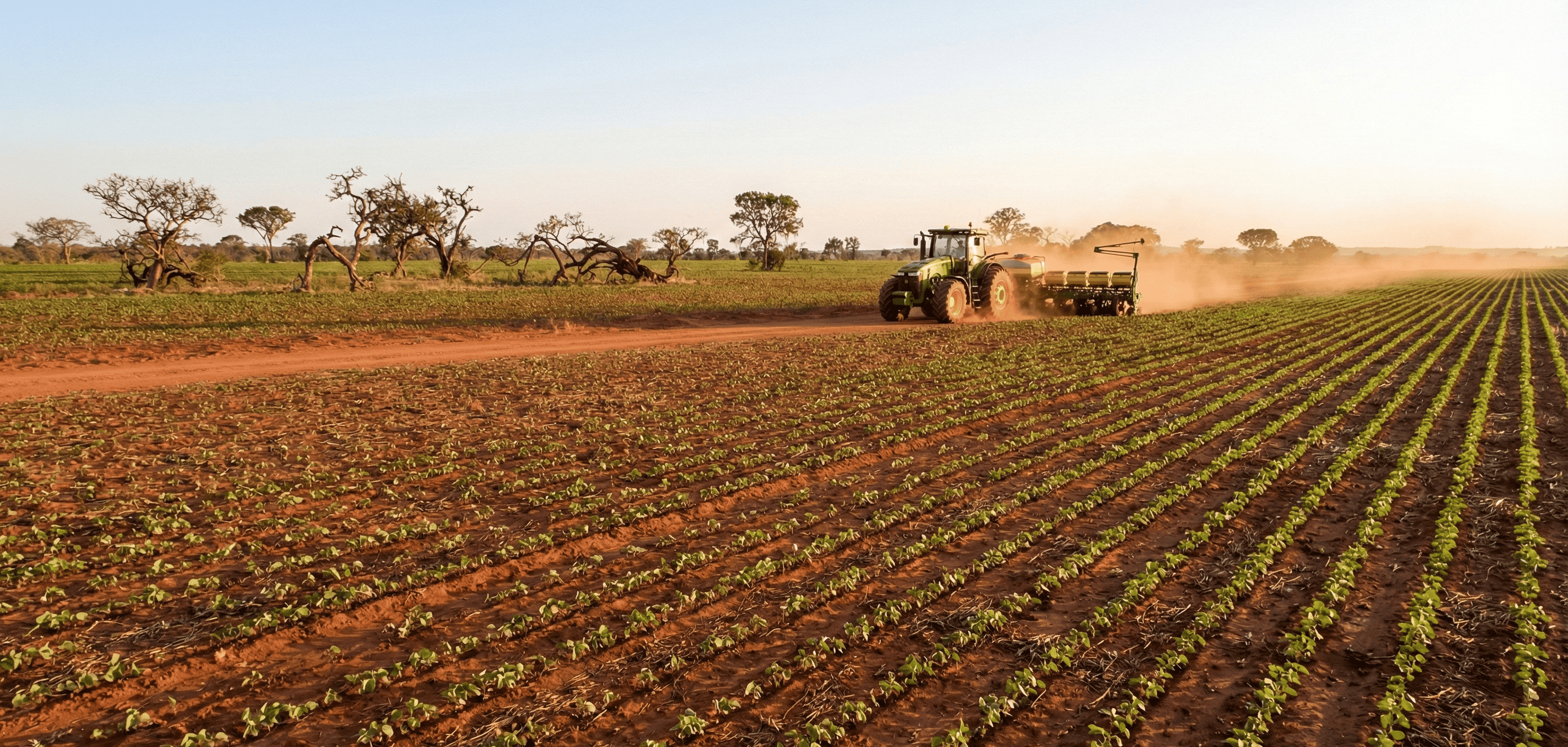
Input costs rise, climate variability increases, and margins compress. Maintaining productivity over time is no longer guaranteed.
Agribusinesses must increase efficiency, manage risk, and respond to market and regulatory pressure at the same time. Biochar supports all three.
Input costs continue to rise
- Fertilizers
- Soil amendments and lime
- Seeds
- Fuel and energy
Climate variability is increasing
- Longer droughts
- Irregular rainfall and excess water
- Higher volatility in yields and pasture performance
Two value streams: productivity + resilience, and durable carbon storage.
Productivity and resilience
When integrated strategically, biochar can:
- Increase efficiency of fertilizers and inputs
- Stabilize crop and pasture performance
- Reduce exposure to drought and excess rainfall
- Slow or reverse soil and pasture degradation
These benefits compound across large-scale systems: row crops, perennials, tree plantations, and pasture operations.
Carbon and revenue value
Biochar permanently stores carbon in soils and pastures. When this storage is measured, documented, and verified, it can generate paid carbon credits.
Credits are already in demand in Europe and the United States for carbon removal and supply-chain requirements, creating an additional revenue stream.
Why Brazil is key for biochar Por que o Brasil é chave para o biochar Por qué Brasil es clave para el biochar
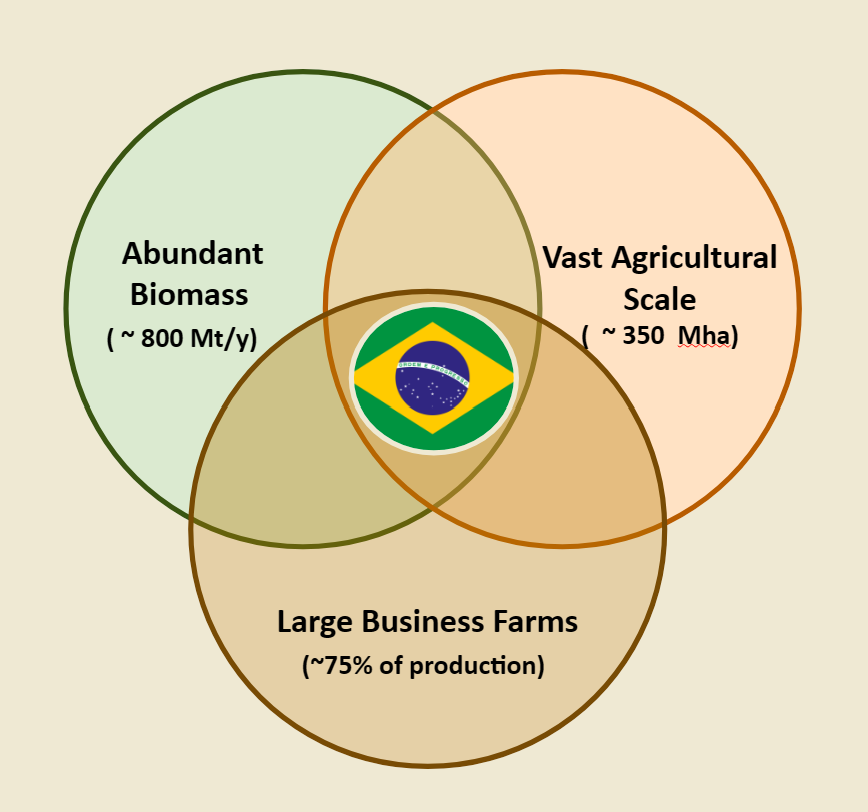
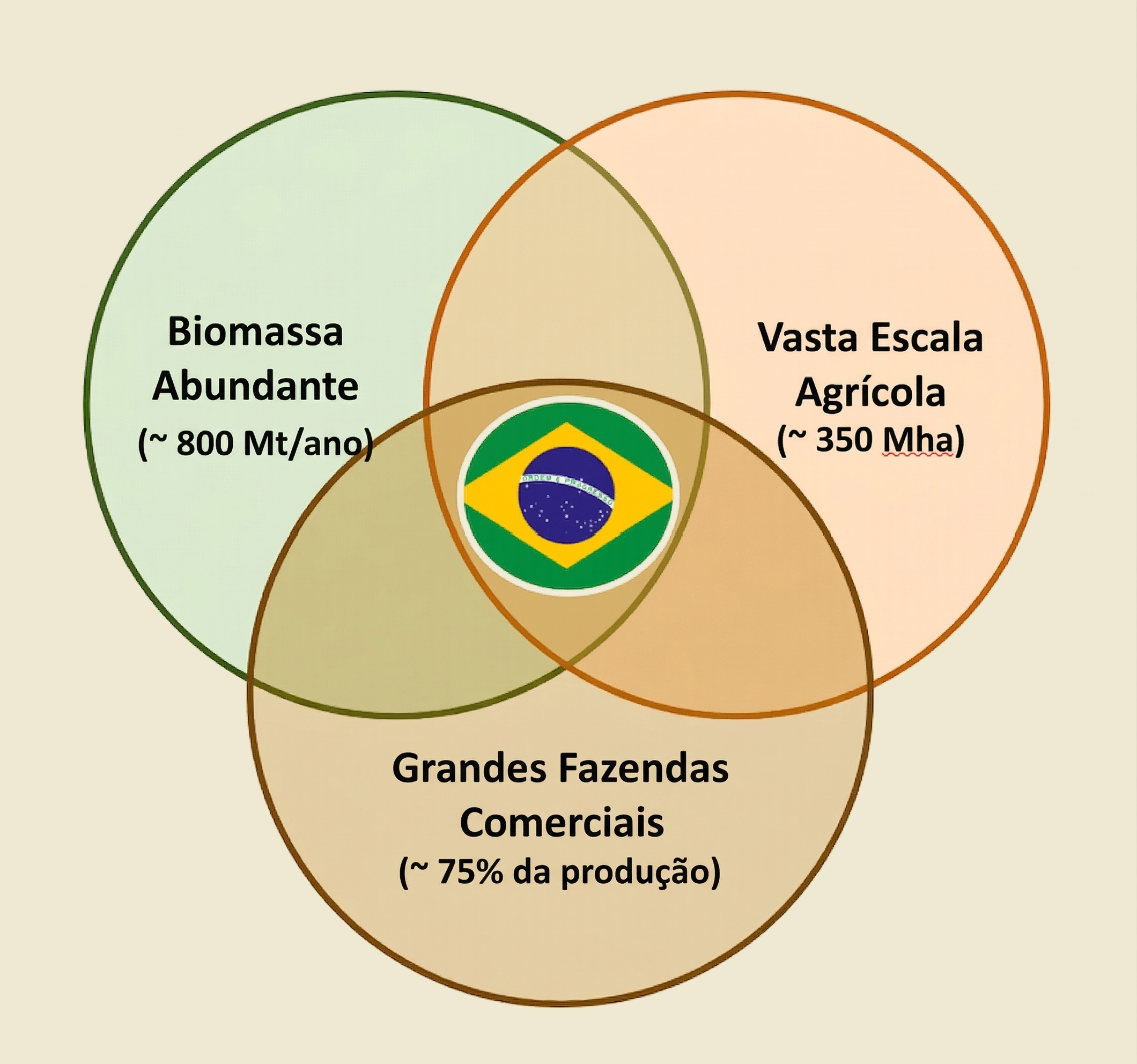
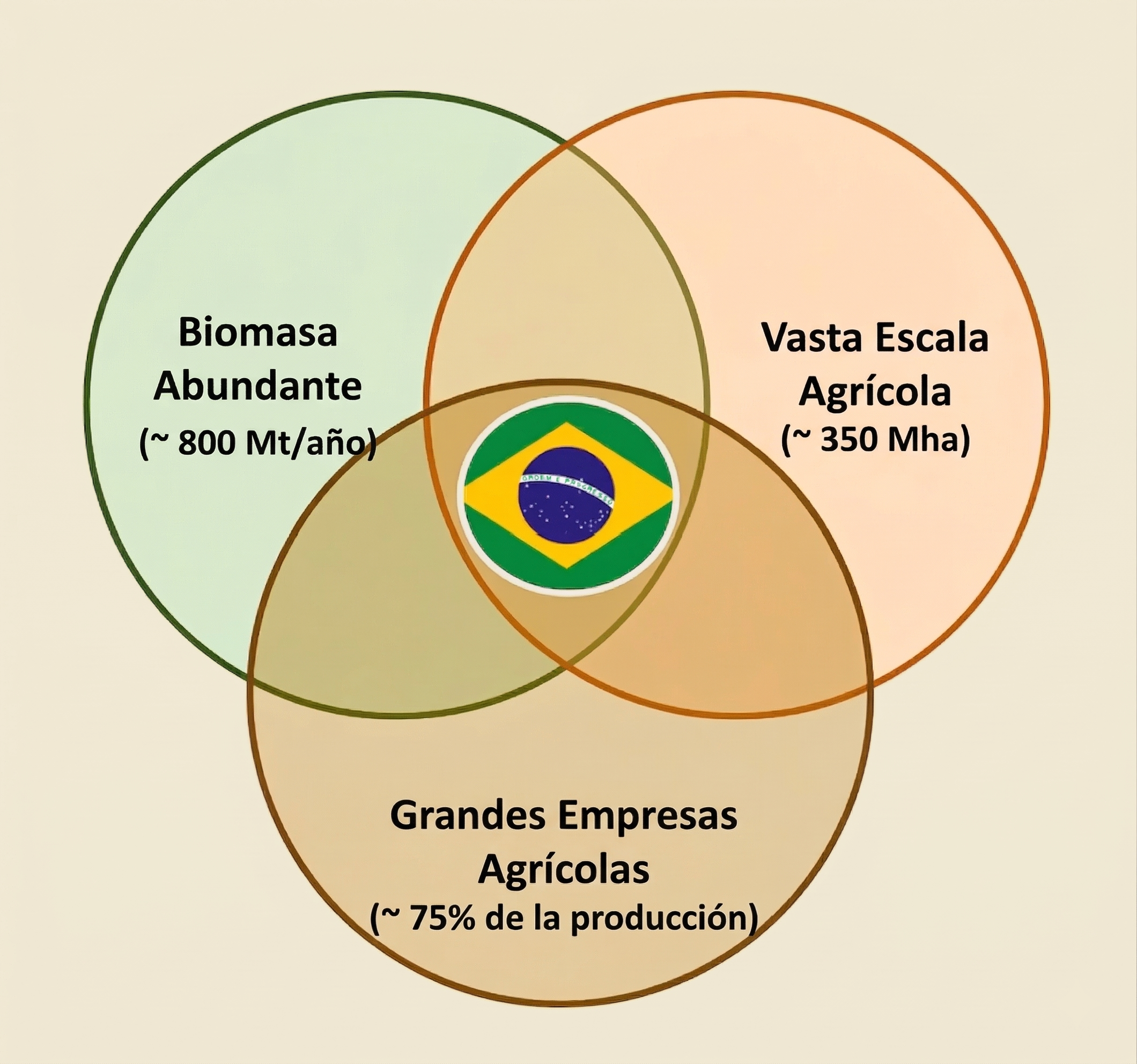
Brazil concentrates the three conditions required for scalable biochar deployment: O Brasil concentra as três condições necessárias para uma implantação escalável de biochar: Brasil concentra las tres condiciones necesarias para un despliegue escalable de biochar:
- Abundant biomass supply Oferta abundante de biomassa Abundante oferta de biomasa
- Large-scale mechanized agriculture Agricultura mecanizada em grande escala Agricultura mecanizada a gran escala
- Operational scale at farm level Escala operacional no nível da fazenda Escala operativa a nivel de finca
This enables deployment at scale with fewer coordination constraints than other markets. Isso permite implantação em escala com menos restrições de coordenação do que em outros mercados. Esto permite desplegar a escala con menos restricciones de coordinación que en otros mercados.